
from the studio
“THE HIGHEST STATE OF HOLISTIC HEALTH”: A Field Guide to Peak Wellness Wankery
Ally Taylor
23/02/2026
AN ARTICLE BY ALLY TAYLOR
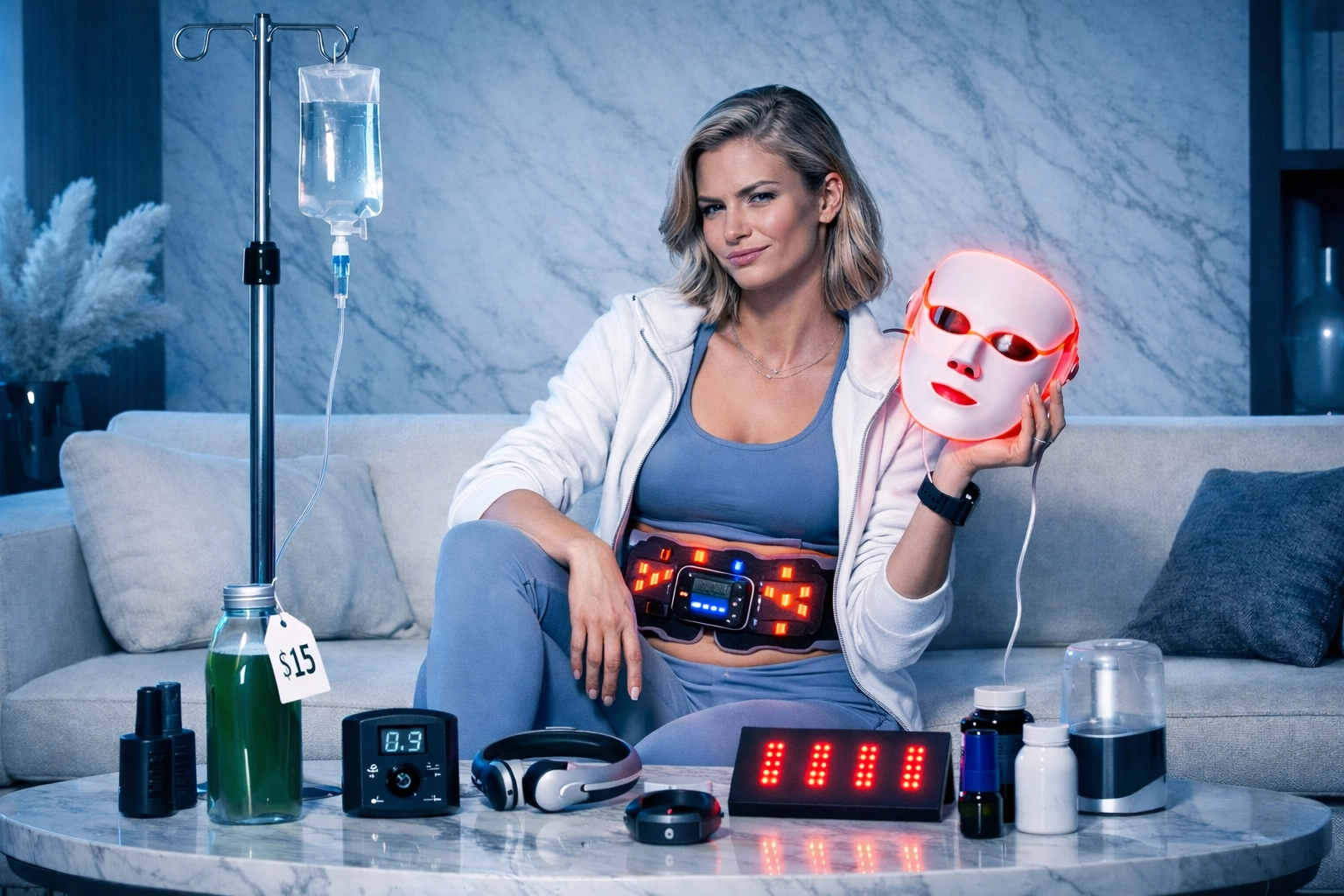
Let me paint you a picture: It’s 5:47 AM. A wellness influencer with 400K followers is mid-sunrise meditation on a Balinese clifftop, wearing £180 athleisure, clutching a £45 apoptogenic latte, about to post a carousel about “raising your frequency.” The caption will mention their IV vitamin drip appointment, their new red-light therapy bed, and how you too can achieve this level of wellness, if you just commit harder, buy better, and aspire more.
This, friends, is peak wellness wankery.
And it’s not just annoying, it’s actively harmful, scientifically bankrupt, and designed to make you feel morally inferior for not having a spare £300 lying around for your morning routine alone.
The £5.6 Trillion Moral High Ground
The wellness industry is now worth $5.6 trillion globally (approximately £4.4 trillion). That’s not a typo. That’s more than the entire pharmaceutical industry. And here’s the kicker: much of what’s sold as modern wellness has little to no scientific evidence of working.
But this isn’t really about health, is it? It’s about status. Wellness has become the new luxury handbag, a way for the wealthy to signal moral superiority while simultaneously showing off how much disposable income they have. “I care about my body so much I can afford to spend £200 on a single IV drip. What do you care about?”
The formula is beautifully simple: Identify a health concern (usually through fearmongering), magnify it until people are genuinely anxious, then sell an expensive solution that only people with significant wealth can access. Repeat. The irony? Basic health, balanced diet, adequate sleep, daily movement, costs a fraction of what the industry peddles. But there’s no Instagram clout in admitting you just went for a walk and ate some broccoli.
Research shows that when wellness influencers claim a product “changed their life,” they’re often monetizing that story by selling the same product to their followers, sometimes earning 20-30% commission per sale. It’s not wellness. It’s a pyramid scheme in Lululemon.
Let’s Debunk Some Bollocks, Shall We?
Coconut Oil Pulling
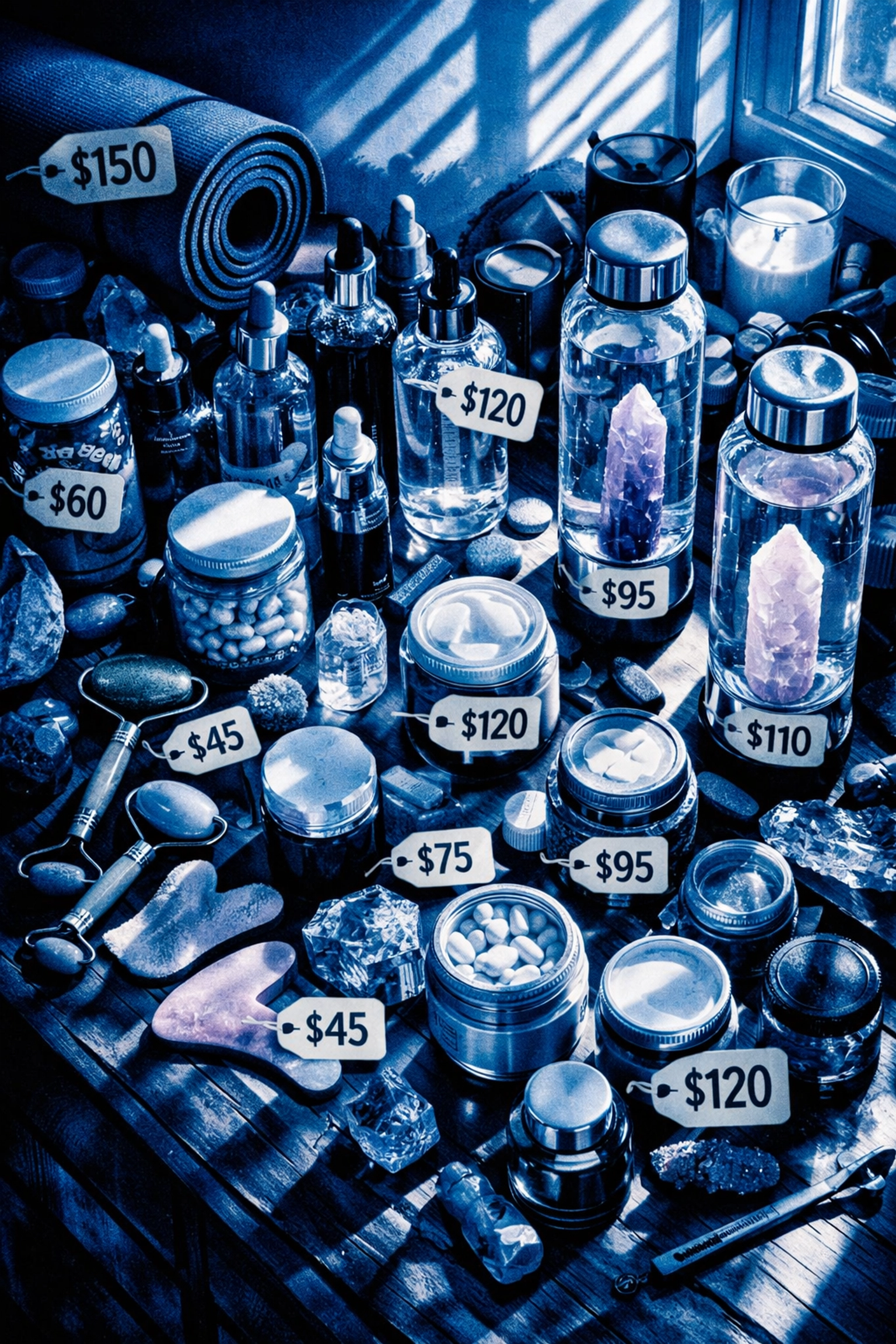
Ah yes, the ancient Ayurvedic practice that’s been repackaged as a detoxifying miracle by people who think “toxins” is a scientific term. The claim? Swish coconut oil in your mouth for 20 minutes each morning and it’ll pull toxins from your blood, cure systemic disease, and possibly make you a better person. The science? A systematic review found that oil pulling is fine for reducing plaque and oral hygiene outcomes (so: mouth benefits, not magical blood detox).[^1][^2] But detoxing your blood? Curing autoimmune disease? That’s your liver and kidneys’ job, and they do it for free while you sleep. No £25 jar of virgin coconut oil required. (Also, the “toxins” crowd never seems able to name the toxin. Convenient.)
EMS Training (Paying to Be Electrocuted While Standing Still)
Electrical Muscle Stimulation studios have popped up everywhere, promising you can get a “two-hour workout in 20 minutes” by wearing a special suit that electrocutes your muscles while you do basic squats. It costs about £40-80 per session. Here’s what research actually shows: whole-body EMS can improve strength/body composition, but it’s not a cheat code that beats proper resistance training across the board, and it definitely doesn’t magically replace learning to move well.[^3][^4] Also, it bloody hurts. You’re literally paying someone to torture you with electricity instead of just… moving your body through natural ranges of motion. Efficiently inefficient.
Alkaline Water (A Physiological Fairy Tale)
Drinking high-pH water to “alkalize your body” is one of those ideas that sounds science-y until you remember you have a stomach. Your gastric acid sits around pH 1.5–3.5 and it neutralises whatever trendy alkaline concoction you just paid £6 for immediately. Your body also regulates blood pH very tightly (because “blood pH roulette” would be… fatal). So no, you are not “changing your internal terrain” with a bottle of smug. You’re hydrating. Which is great. Just don’t pretend it’s chemistry witchcraft.[^5][^6]
IV Vitamin Drips (Expensive Pee, Mainly)
If you’re a healthy person with a functioning gut, IV vitamin drips are basically a very expensive way to produce brightly coloured wee. There are legitimate medical uses for IV vitamins in specific clinical situations; “I feel a bit tired and saw a TikTok” isn’t one of them. They’re marketed like bio-hacking, but the evidence for routine IV vitamin injections in healthy people is… thin, to put it politely.[^7][^8]
Injectables, Peptides, and Bio-Hacking Your Way to Immortality
The latest trend among Silicon Valley types (and their UK imitators) is “bio-hacking”, which apparently means injecting yourself with a cocktail of peptides, NAD+, and other expensive substances that might do something, but probably don’t, and definitely aren’t regulated properly. Is there emerging research on some of these compounds? Sure. Is there enough evidence to justify spending thousands per year on unregulated injectables when you still only sleep 5 hours a night and eat meal-replacement shakes? Absolutely not. (If your lifestyle is a car crash, adding peptides is not a seatbelt.)
The sad truth is that most of these “cutting-edge” interventions are being sold to people who haven’t mastered the basics. It’s like buying a Formula 1 car when you haven’t passed your driving test.
The Boring Truth Nobody Wants to Hear
You know what actually drives longevity, reduces disease risk, and improves quality of life? The same five things that have been true for decades: the “Big 5” lifestyle truths (deeply boring, annoyingly effective).
1. Exercise (regular, varied, strength and cardio)
2. Eat vegetables (and generally don’t eat like a bin)
3. Sleep 7-9 hours (in an actual bed, not “optimized” with a £3,000 mattress you don’t need)
4. Manage stress (therapy, meditation, not doomscrolling at 2 AM)
5. Social connection (real humans, real conversations)
That’s it. That’s the list.
No £200 supplements. No cryotherapy chambers. No jade eggs for your nethers (yes, that was a real thing). Just the boring, unsexy, free-to-cheap behaviours that humans have known about since before Instagram existed.
A large multi-cohort analysis found that modifiable lifestyle factors are strongly associated with lifespan, with benefits seen even when accounting for genetic predisposition (translation: your genes aren’t a free pass to ignore the basics).[^9][^10]
What We Actually Do at Amovida
Here’s the thing: we’re a boutique fitness studio, so yes, we cost more than a budget gym membership. But we’re not selling you magic. We’re not claiming our classes will “align your chakras” or “optimize your mitochondria” (whatever that means).
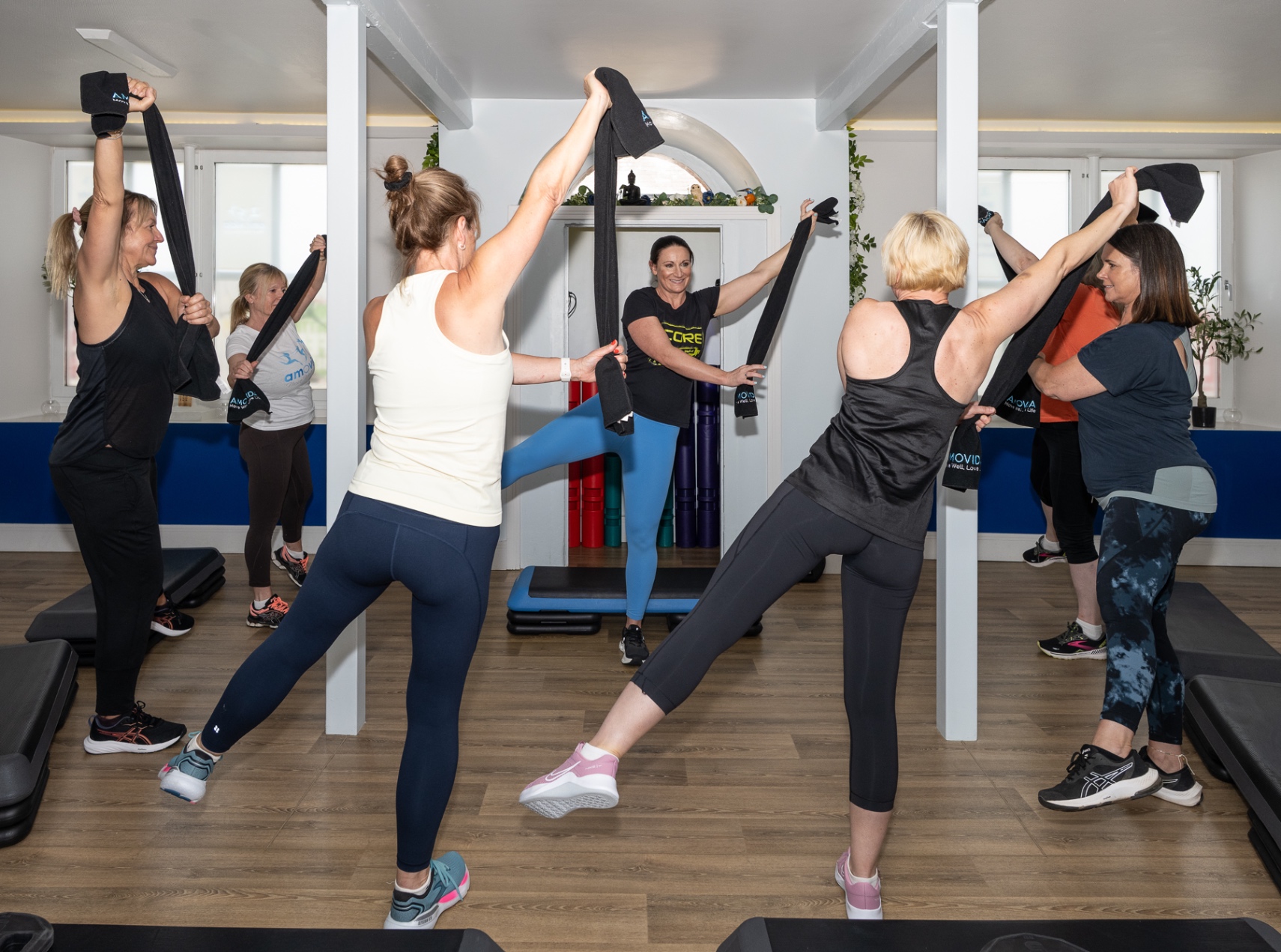
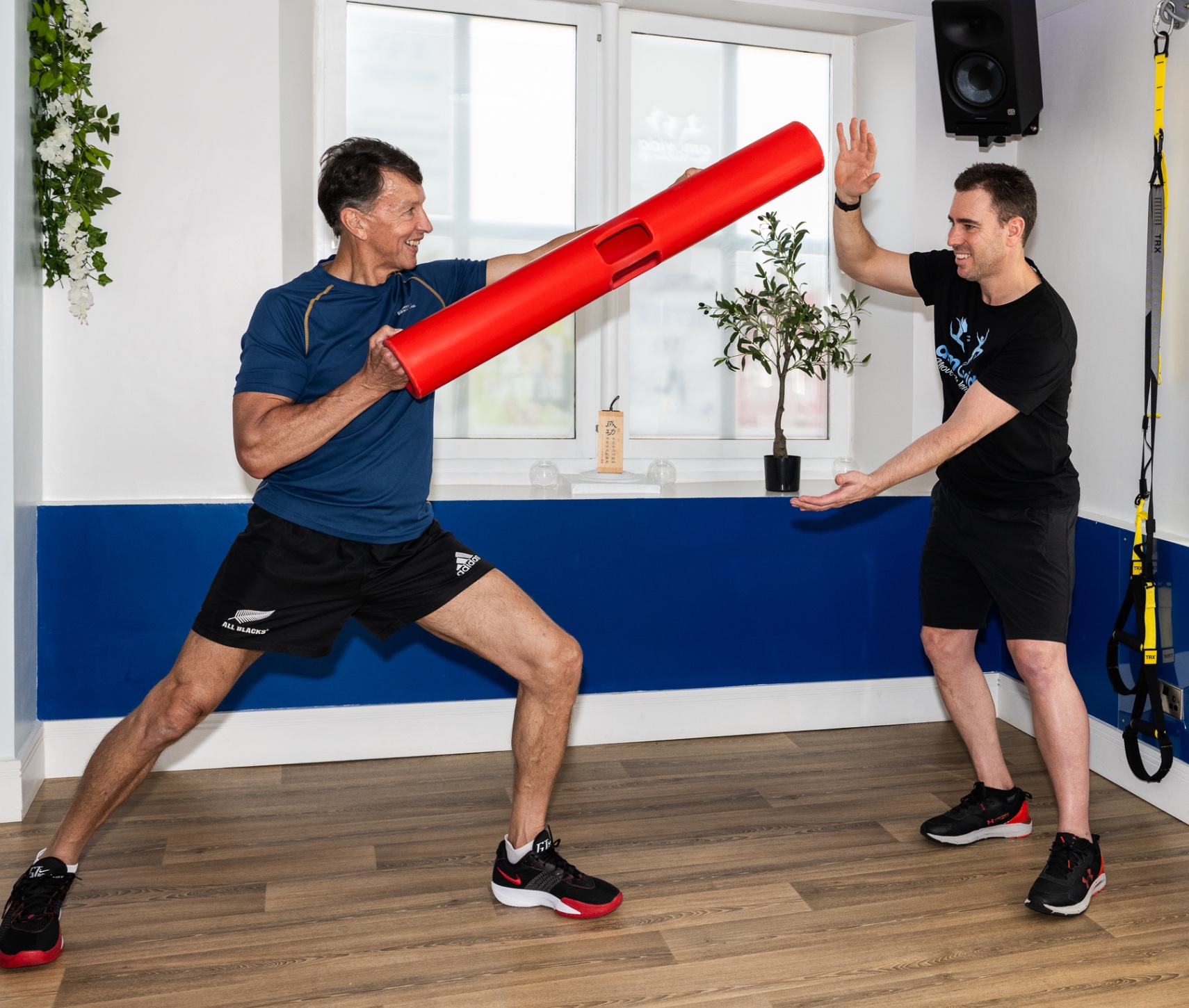
We teach multi-planar, functional movement using evidence-based programming. We use tools like ViPR, TRX, and GRIPRs not because they’re trendy, but because they train your body to move the way it’s supposed to: in three dimensions, under load, with control. We focus on strength, mobility, and cardiovascular fitness because that’s what the research shows actually improves quality of life.
And we do it in small groups (max 8 people) because social support is one of those Big Five longevity factors. Turns out, sweating with other humans in a non-judgmental environment is good for you. Shocking, I know.
We’re not going to tell you to buy a £400 supplement stack or suggest you’re morally failing if you eat a biscuit. We’re going to help you get stronger, move better, and feel more capable in your actual life: whether that’s picking up your kids, carrying shopping, or just getting off the toilet when you’re 80 without assistance.
The Real Scandal
The wellness industry’s greatest trick isn’t selling overpriced nonsense: it’s convincing people that basic health is complicated and expensive. That you need a PhD in nutrition and a six-figure salary to be well.
A study found that 33% of TikTok videos offering health advice were actively misleading, yet they got more engagement than evidence-based content. Why? Because “eat vegetables and go for a walk” doesn’t get clicks. “This one weird supplement DESTROYED my inflammation” does.
The performance of wellness: the morning routines, the elaborate rituals, the expensive gear: has become more important than actual health outcomes. And worse, it’s creating what researchers call “borderline orthorexia”: an obsession with perfect health practices that increases anxiety rather than improving wellbeing.
Some people are delaying or forgoing proven medical treatments because an influencer told them celery juice would cure their thyroid condition. That’s not wellness. That’s dangerous.
So What Do We Do?
Stop following wellness influencers who make you feel inadequate. Stop buying supplements you don’t need. Stop believing that health is something you can purchase in 20-minute increments from someone with perfect lighting and a ring light. Start with the basics: Move your body regularly. Eat mostly plants. Sleep enough. Find ways to manage stress that don’t involve spending money. Connect with real humans in real life. If you want structure and support, come train with us. If you prefer to do it yourself, brilliant: go for a walk and do some press-ups in your living room. Both are infinitely more valuable than swishing coconut oil while standing on a vibration plate.
Or-wild suggestion-just eat some broccoli and go for a walk. The best things we can do for our health aren’t Instagram-worthy. They’re just… true. And they’ve been true the whole time, buried under £5.6 trillion worth of expensive bullshit. Wellness isn’t a luxury product. It’s a practice. And it shouldn’t cost more than your rent.
If you’d like to put any of this into practice, we’re based in East Horsley and we’d love to help. [Get started here.]
Bibliography
[^1]: The effect of oil pulling with coconut oil to improve dental hygiene and oral health: A systematic review, Woolley J et al., Heliyon, 2020.
[^2]: Effectiveness of Oil Pulling for Improving Oral Health: A Meta-Analysis, Peng TR et al., Healthcare (Basel), 2022.
[^3]: Effects of Whole-Body Electromyostimulation versus High-Intensity Resistance Exercise on Body Composition and Strength, Kemmler W et al., Evid Based Complement Alternat Med, 2016.
[^4]: Iron Beats Electricity: Resistance Training but Not Whole-Body Electromyostimulation Improves Cardiometabolic Health…, Reljic D et al., Nutrients, 2021.
[^5]: Health effects of alkaline, oxygenated, and demineralized water compared to mineral water among healthy population: a systematic review, Sunardi D et al., Rev Environ Health, 2022.
[^6]: Systematic review of the association between dietary acid load, alkaline water and cancer, Fenton TR & Huang T, BMJ Open, 2016.
[^7]: Intravenous vitamin injections: where is the evidence?, Drug Ther Bull, 2023.
[^8]: Consumer Intravenous Vitamin Therapy: Wellness Boost or…?, Dayal S et al., Nutrition Today, 2021.
[^9]: Genetic predisposition, modifiable lifestyles, and their joint effects on human lifespan: evidence from multiple cohort studies, Bian Z et al., BMJ Evid Based Med, 2024.
[^10]: Healthy lifestyle and life expectancy in people with multimorbidity in the UK Biobank…, Chudasama YV et al., PLOS Medicine, 2020.
Be The First To Comment