
from the studio
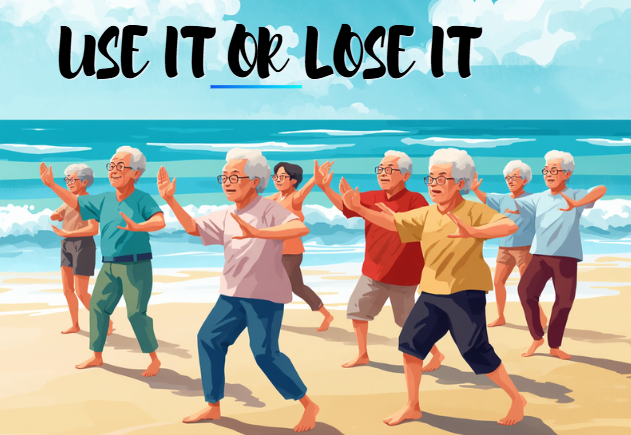
“USE IT OR LOSE IT”: Why the Body You Move Today Determines the Life You Live Tomorrow
Grant Taylor
01/06/2026
Puzzles keep your mind busy.
Movement keeps your mind and your body capable.
But only the right kind of movement actually transfers to the life you want to keep living.
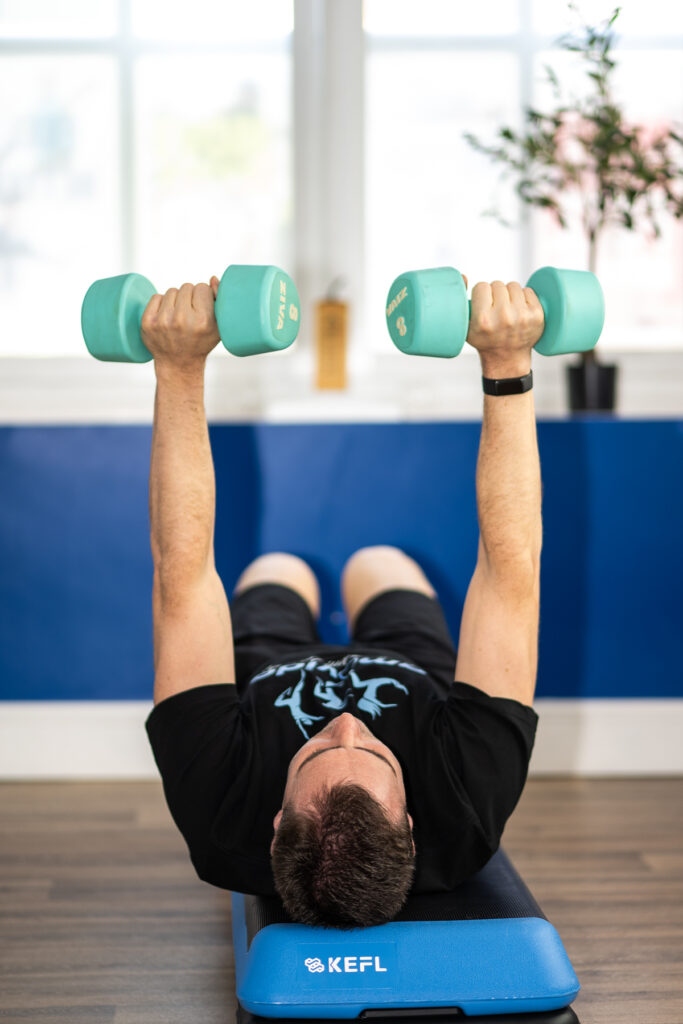
AN ARTICLE BY GRANT TAYLOR
You have probably heard the phrase “use it or lose it.” We say it all the time in class, and not just about your hips or your balance. We mean your brain too.
Because here is something that genuinely surprised us when we first came across the research: the brain responds to movement in exactly the same way it responds to learning. Challenge it and it grows. Leave it undisturbed and it quietly starts to let things go.
There is a name for that process. It is called synaptic pruning. Understanding it is one of the reasons we design our classes the way we do.
What is synaptic pruning?
Your brain is full of synapses, which are the tiny connections between neurons that allow signals to travel from one part of your brain to another. Every time you learn something new, your brain builds more of these connections. Every time you practise something, those connections get stronger.
But your brain is also extraordinarily efficient. Connections you use regularly get reinforced. Connections you stop using get pruned away, cleared out like overgrown paths that nobody walks down anymore.
This pruning process is not a flaw. In younger years it is essential, and it is how the brain sharpens and refines itself. But as we get older, it becomes something to be mindful of. Because the connections being pruned are not just abstract circuits. They are the pathways behind your balance, your coordination, your reaction speed, and your ability to learn new things.
The synapses you actively use get strengthened. The ones you stop using get pruned away. Your brain cannot tell the difference between “I chose not to challenge myself” and “I no longer need this.”
Why puzzles and crosswords are not enough
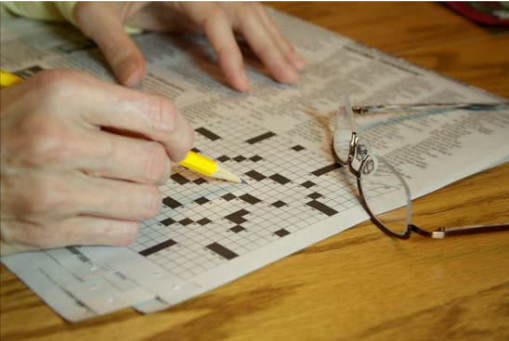
We are not dismissing crosswords. A puzzle before bed is a lovely thing. But there is an important distinction that often gets overlooked when people talk about keeping their brain sharp as they age.
Crosswords, sudoku, and brain training apps challenge your mind. What they cannot do is challenge your body. And that matters enormously, because physical function and independence in later life are not purely a muscular question. They are a neurological one.
Movement is the only activity that works on both at the same time. When you challenge your body with unfamiliar, complex physical tasks, you are not just building strength. You are reinforcing the neural pathways that tell your body where it is in space, how to respond when you stumble, and how to move safely and confidently in the world around you.
Not all movement is created equal
Here is where things get more interesting, and where the science starts to separate genuinely intelligent training from simply being active.
Motor skill development, which is the process by which your brain learns and refines physical movement, follows a very specific rule. The movements you train need to closely match the movements you actually want to improve. Scientists call this the principle of specificity. In plain language: you get better at what you practise, and nothing else.
This sounds obvious. But it has profound implications for how exercise is designed, and it is something that conventional fitness culture gets badly wrong.
Take the plank. It is everywhere. Fitness classes, gym programmes, magazine workouts. And it does something, there is no question about that. But what it does is train your body to hold a rigid, static position on the floor. That is the specific skill it develops. Holding a rigid, static position on the floor.

Your core, in almost every activity that actually matters in real life, does not work that way. When you pick something up off the ground, reach for something overhead, turn to speak to someone behind you, play a round of golf, or simply walk on uneven ground, your core is working dynamically. It is rotating, stabilising, absorbing force, and responding to movement in three dimensions. A plank does not train any of that. It trains you to do a plank.
Consider golf as an example. The golf swing is one of the most complex rotational movement patterns the human body performs. It requires coordinated rotation through the hips, spine, and shoulders, precise timing, and the ability to generate and transfer force through a sequence of joints in a fraction of a second. No amount of planking develops that pattern. The motor skill required for a golf swing can only be developed by training movements that share those same mechanical demands.
The same logic applies to picking up your grandchildren, reaching into the back of the car, stepping off a kerb without thinking about it, or getting up from a chair without using your hands. These are all specific motor skills. They need to be trained specifically.
The question we ask when designing every exercise is not “does this make people work hard?” It is “does this transfer to the life they actually want to live?” Those are very different questions, and most fitness programmes only ask the first one.
The independence question nobody wants to ignore
Here is the part of this conversation that matters most to us, and honestly, the part that drives everything we do at Amovida.
Losing your independence as you get older is rarely caused by a single dramatic event. It happens gradually, through a slow accumulation of small losses. The confidence to walk on uneven ground. The strength to get up from a low chair without help. The balance to reach for something on a high shelf without a moment of anxiety. The ability to carry your own shopping, play on the floor with your grandchildren, or simply get through a day without pain.
These are not just physical abilities. They depend on a constant, active conversation between your brain and your body. And that conversation only stays fluent if you keep having it, with movements that are specific enough to actually maintain it.
Movement is not just exercise. It is the practise of staying capable. Every class is a rehearsal for the life you want to keep living.
Research is clear that regular, varied physical activity maintains the neural connections responsible for balance, proprioception (your body’s sense of where it is in space), and motor control. These are precisely the functions that, when they decline, lead to falls, reduced confidence, and the gradual narrowing of what feels possible.
A crossword will not catch you if you stumble. Strong, well-trained movement patterns will.
Why our classes are designed to challenge your Movement IQ
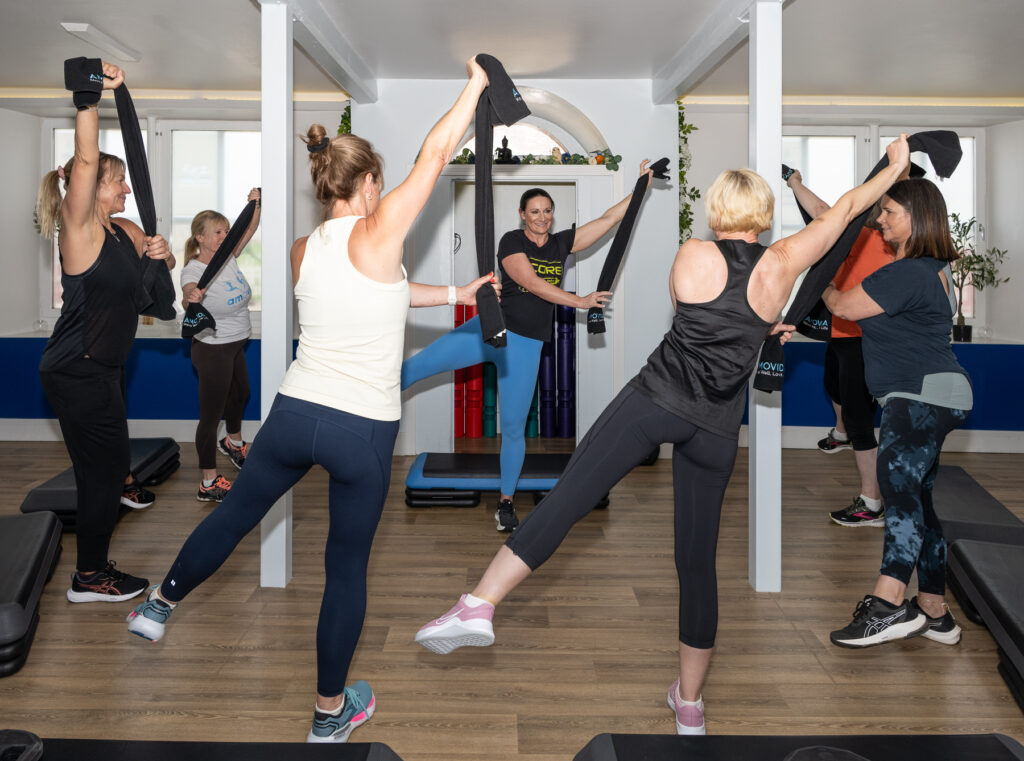
This is precisely why we do not just put you through a standard routine and send you home. Every class at Amovida is deliberately designed to challenge what we call your Movement IQ, which is the ability of your brain and body to work together, adapt in real time, and learn something new.
We read the research. We understand motor learning, biomechanics, and how the brain acquires physical skills. And we design every session around movements that closely match the demands of real life, not movements that look impressive on a timetable but train you only to perform that movement in that room.
When you walk out of an Amovida class, you should feel more capable in the world than when you walked in. Not just fitter. Capable. That is the standard we hold ourselves to.
This is not about working harder. It is about moving smarter.
We have members in their 80s. We have members recovering from surgery. We have members who walked through our door convinced that exercise was simply not for them anymore.
None of them needed to push harder. They needed to be challenged in the right way, with movements that asked something of their brain as well as their body, movements designed to transfer directly to the life they want to keep living, in a group small enough that we could actually see what was happening and adapt in real time.
That is what we are here for. Not to exhaust you, but to keep you sharp, strong, and genuinely capable of the life you want to live, for as long as possible.
If you have been thinking about coming in but are not quite sure what to expect, we would love to have a chat. No pressure, no commitment, just a conversation. Classes are capped at 8 people and we know everyone by name. Whatever your starting point, we will work with it. Come and say hello at amovida.co.uk, or simply drop us a message. We are easy to find and very easy to talk to.
Be The First To Comment