
ARTICLES
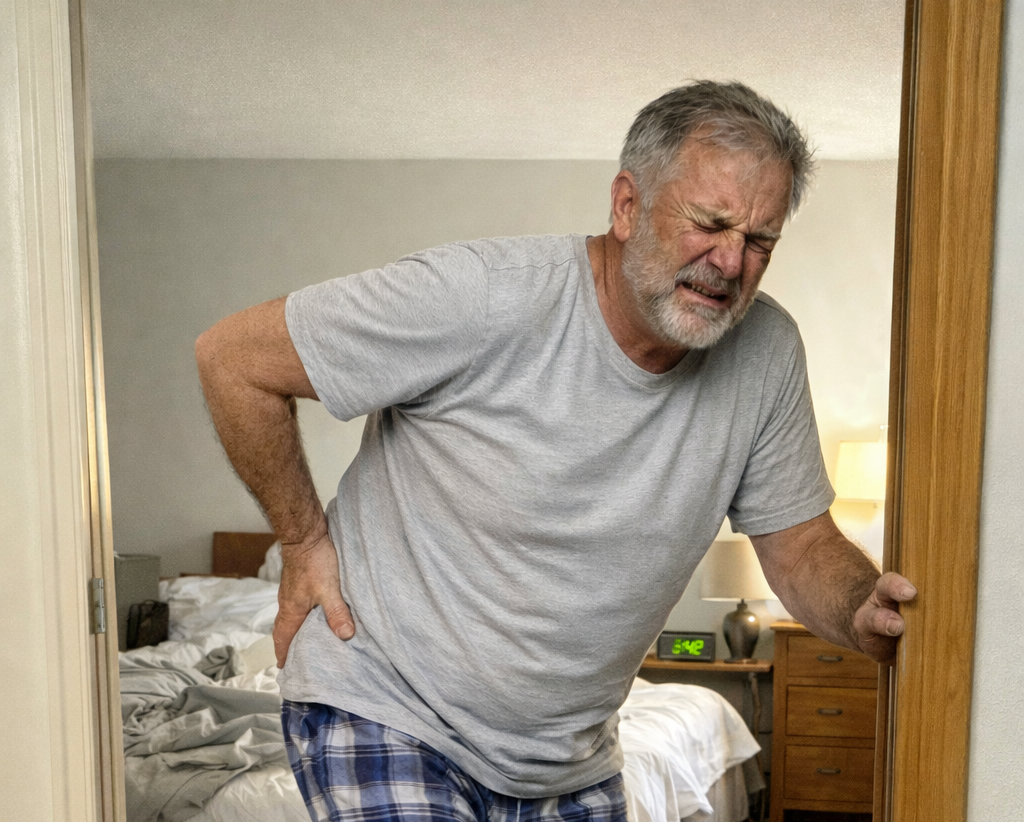
WHEN SITTING ON THE LOO FEELS LIKE AN OLYMPIC EVENT: A little soreness today is tomorrow’s strength in disguise.
Grant Taylor
16/02/2026

AN ARTICLE BY GRANT TAYLOR
You step out of bed, and your body whispers: “Oh yes, I noticed what you did yesterday.” Suddenly you’re shuffling as though you didn’t quite make it to the loo on time.
Welcome back to training and to the familiar companion we call DOMS.
Delayed Onset Muscle Soreness, or DOMS, is that stiffness, tenderness, or aching you feel in your muscles a day or two after trying something new, or after restarting classes you had taken a break from. It often peaks between 24 and 72 hours, then fades within a few days. It isn’t an injury, more a sign that your body is adapting, reshaping, and learning.
So what actually causes DOMS?
Interestingly, science hasn’t pinned down one single explanation. Instead, there are six main theories, overlapping pieces of a puzzle rather than a neat solution:
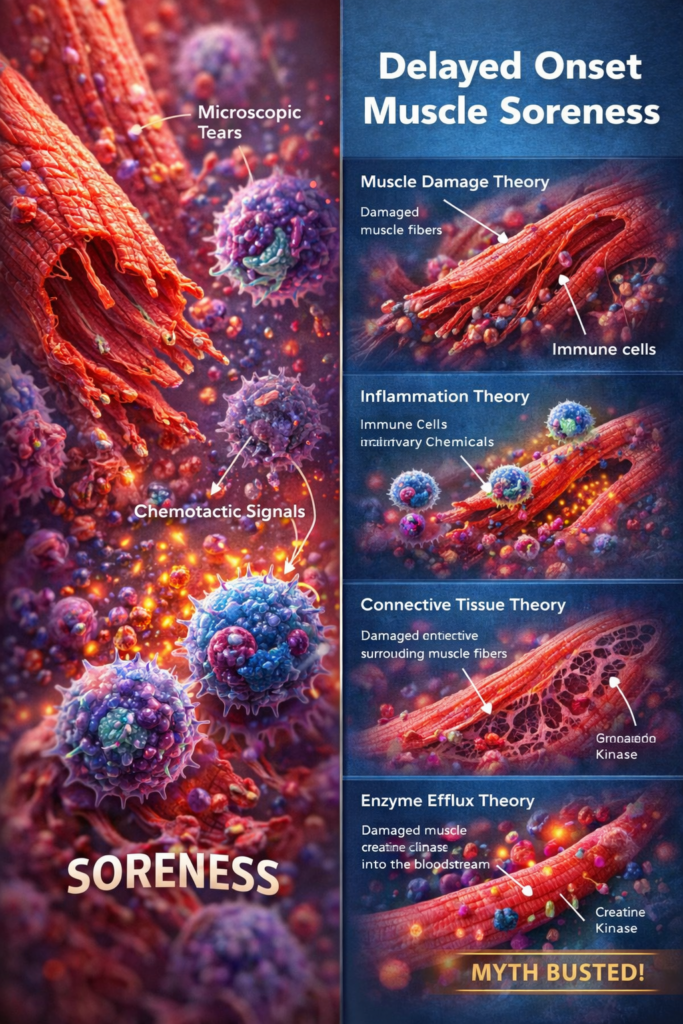
- Muscle Damage Theory: Microscopic tears in muscle fibres from eccentric or intense exercise activate pain receptors.
- Inflammation Theory: Those tiny tears trigger inflammation, with immune cells releasing chemicals that sensitise pain pathways.
- Connective Tissue Theory: It’s not just muscle, the connective tissues around fibres can also sustain micro damage, leading to soreness.
- Enzyme Efflux Theory: Damaged cells leak enzymes such as creatine kinase into the bloodstream, signalling stress and correlating with soreness.
- Lactic Acid Theory: Once blamed, but long debunked. Lactic acid clears quickly and doesn’t match the delayed timing of DOMS, in fact it can be a helpful fuel.
- Muscle Spasm Theory: Post exercise spasms may restrict blood flow, releasing substances that irritate pain receptors.
No single theory gives us the full story, but together they help explain why DOMS appears when it does.
Can you prevent DOMS? Not entirely. Unless you never change your training, which would mean no growth, no variety, no fun, DOMS will make the occasional appearance. The practical advice is to ease in gently when starting something new, and accept that a little soreness is part of the adaptation process.
How do you manage it? The instinct is to rest, but gentle movement is actually your best ally: walking, light stretching, anything that keeps blood flowing. Add to that good sleep and solid nutrition, and recovery is smoother.
Other remedies such as ice baths, massages, needles, or hot packs can feel soothing, and the placebo effect is powerful, but current research doesn’t show they speed up recovery.

The good news is that the more variety you bring into your movement library, the more resilient your body becomes, and the less DOMS will trouble you. Even your instructors get it now and again, usually after holiday or when the latest Mossa releases for Group Power, Core, Centergy, or Active land in our laps. A fresh challenge always brings a twinge or two, and a reminder that our bodies still have more to learn, adapt to, and celebrate.
Be The First To Comment